This week was our 2nd week of school. I spent our reading time introducing each center and providing time for students to practice our weekly rotation. Next week we will be starting guided reading groups during this time as well.
Here is a little peak at our Reading Workshop!
Each morning we have reading from 9:15 - 10:55. On days when we have a special in the morning, our reading time runs a little later.
Our schedule looks a little something like this:
This year I'm starting out with 3 guided reading groups, based on reading level. Throughout the year I continuously regroup students based on reading level and skill. In the beginning of the year I keep my groups short and sweet so that I can still keep an eye on students during independent reading and centers. As the year progresses and I see that my students are on task I start spending more and more time with groups.
Want a closer look at each component of our Reading Workshop? Here it is!
Read Aloud / Mini Lesson
I use this time for interactive read alouds and modeling thinking, talking about a text, and recording our thinking on graphic organizers. The first few weeks our lessons focus a lot on our reading workshop procedures and expectations. As the year progresses, our lessons focus on comprehension strategies. Next week we will be focusing on determining importance and nonfiction text. After our read aloud/mini-lesson students start independent reading.
Independent Reading
Students each have their own book bin. As part of their morning routine, students select books from our classroom library. They have over 2,000 books to choose from. They keep 2-3 classroom books inside their book bin in addition to their school library books. During independent reading students may sit at their desk, on the carpet, or in a cozy spot around the classroom. Our rule is that, where ever they sit, they must stay in that spot for the whole duration of independent reading and they must read quietly and independently. During independent reading students record notes on a post-it. I often give them a sentence starter during our read aloud/mini-lesson time such as, "One important detail was..." or "This reminded me of...". However, sometimes I give students free choice. These post-it notes are shared during our share time later and help hold students accountable during this time.

I set a timer and when it goes off, students put their book bins away and start centers. I have strategically placed the materials for each center in different areas around the room so that students spread out.
Centers
We are starting out with 5 reading centers. Last year I had 10 but that turned out to be a lot of paperwork and a lot of "busy work." This year I've toned it down to 5, meaningful and engaging activities that each last about 30 minutes. We use a reading center wheel to help us rotate through the centers, no center cards to mess with. Each student is grouped into a different, mixed-ability, color group. I write students names on each color so they know what group they are in.
Here's a quick overview of each center:
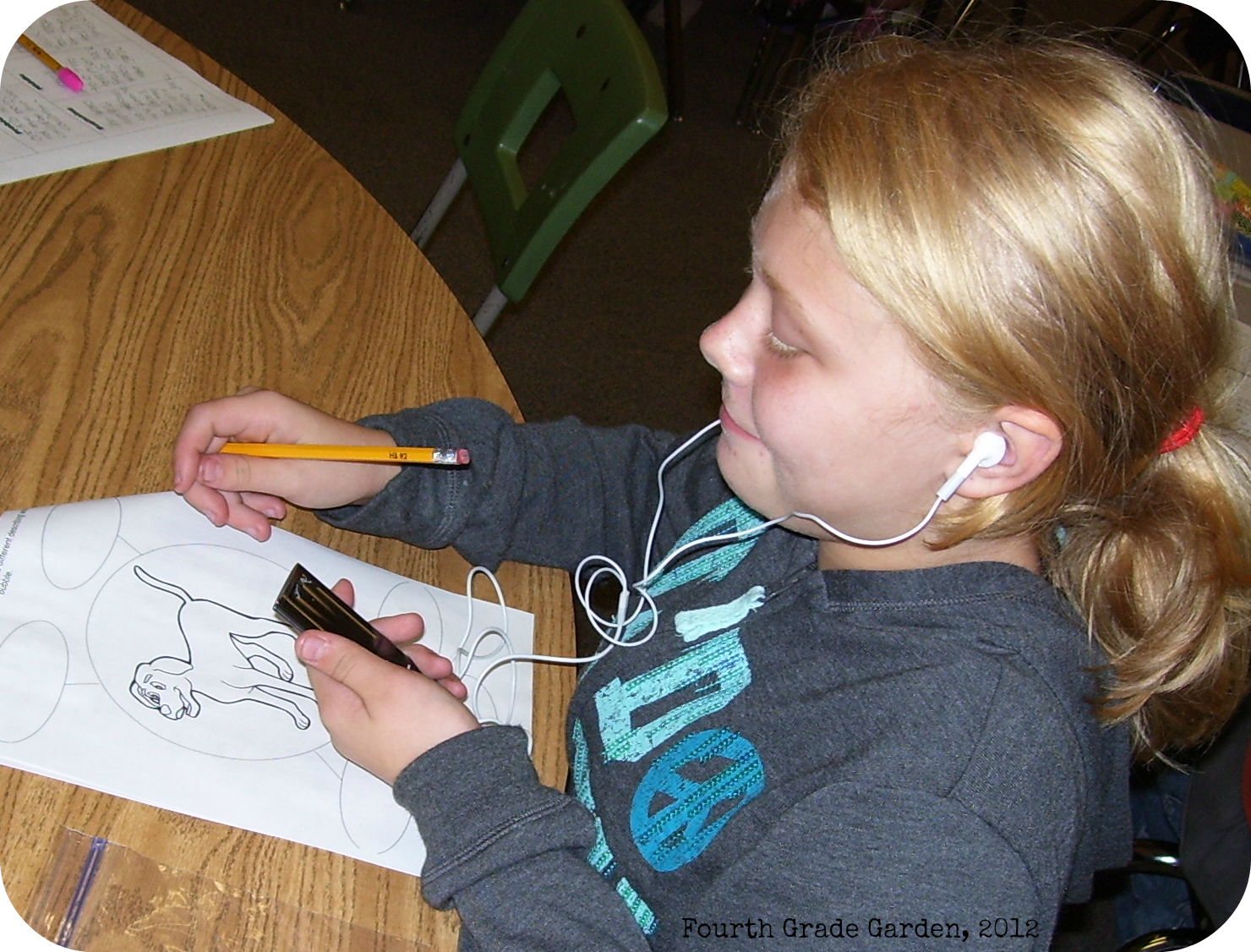
Listening - Students listen to a story on their iPods, take notes, listen a 2nd time, and finish taking notes. They then answer a few short response and extended response questions. This is good prep for our NYS ELA Test.
ABC - All of the spelling worksheets that are in our Harcourt Trophies spelling program and copied and bound into books for each student. They grab their book, and complete the assigned pages for the day. This is great word work and practice for their weekly spelling test.
Writing About Reading - Students grab a copy of Scholastic News or Cricket, read the assigned passage(s) and complete a writing about reading task. This week, students were required to read a few articles from Scholastic News and then write a
letter summarizing their favorite article.
Comprehension - We will be using the computers this year for our comprehension center. I purchased
Raz Kids this and year created an account for each student. Raz Kids is amazing. You can assign students virtual books to read to themselves, they can listen to the story being read with the words highlighted and read along, they can record themselves reading, and they can take quizzes. Each activity earns students stars to spend in the Raz Rocket. My kiddos LOVE this site. Our school also purchases
Study Island so once that is up and running I will allow them to use that site as well.
Fluency - We have received 2
Kindle Fires from
Donors Choose and I am bringing in my own so that students can work with a partner to read an e-book together and then complete an assignment about what they read. If they finish early they can take turns playing some of the educational games we have downloaded on the Kindles. I'm hoping to get a few more funded through Donors Choose. My fingers are crossed!
When students are finished with their centers they put them in the colored bin that represents their group color. This makes it easy for me to see who has and has not completed their centers.
Although the names of our centers stay the same throughout the year, the actual books, resources, and activities change each week.
Sharing
After independent reading and centers students meet back together in a circle to share their post-it notes from the book(s) they have been reading. Sometimes I require everyone to share, sometimes we roll a dice to see if it will be girls or boys, sometimes I let students pass. I try to surprise them so that they are always prepared to share.
Shared Reading or Writing About Reading or Socratic Circle
For the last part of reading, before we go to lunch, we spend time doing one of the following: shared reading, writing about reading, or a Socratic Circle. We do a variety of tasks for each, depending on the day. For shared reading, we sometimes read poems, short stories, or a group chapter book together. Writing about reading can be interactive, shared, or sometimes I use this time to model writing responses or showcase exemplar student work. Socratic circles are based on the read aloud from the morning or another familiar text. I switch up what we do frequently. Sometimes this spills over into our time after lunch depending on our task.
How do you manage reading in your classroom?